
The Problem
Language-Learning Apps Focus On Gamification And Not Learning Efficiently
As an inquisitive A-level student, I recognised that people had learnt how to speak languages more efficiently by engaging with TV series rather than language-learning apps and began to inquire why.
The solution
Interaction Is Essential
My goal is to create an app that centres around interaction as a form of effective learning rather than gamification. Some features will include Voice rooms, immersive libraries, a community feed, and a feature that lets people find native speakers to teach them.
Research
Primary Research
I conducted some primary research on my friends to understand their likes, dislikes, and overall opinion on language-learning apps.
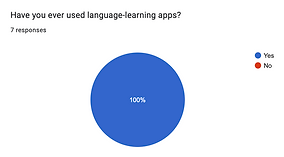

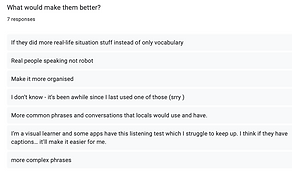
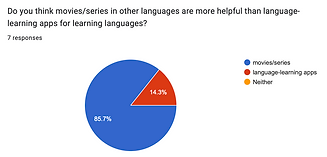
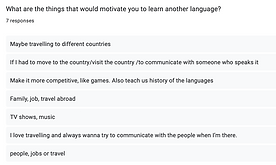

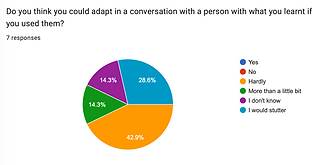
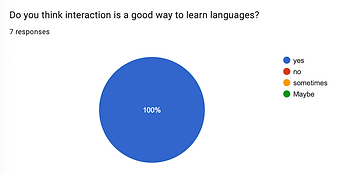

I asked my classmates some questions concerning the language-learning apps they have used. I learned that they were useful for learning short phrases, and that engaging series/movies were more helpful than those apps.
Secondary Research
I conducted some secondary research to understand the general public's likes, dislikes, and overall opinion on language-learning apps.
1
According to easytolearn.io :
The best way to be fluent in a language is through listening and reading, and we should learn from children who listen to a variety of contexts rather than isolated chunks and mimic it
2
According to Altalang.com :
Humans are social creatures, and if we want to hold a conversation, human interactions are essential; they also allow adaptability.
3
According to studyfrenchspanish.com :
-
Chatbots enable you to practice elementary-level conversations without the anxiety of a person. This means you cannot communicate with apps the way you interact with people, and you cannot adapt to the conversation.
-
The issue with gamification is that once you start playing it, you focus on beating the level and not learning the language.
-
Apps are very impersonal compared to face-to-face interactions.
" If you teach people explicitly to memorise vocabulary and grammar rules, most people will do that... But it's much harder to take that knowledge and translate it into the ability to use language- to speak it, understand what you're hearing, and respond in an appropriate way." - Loewen from Msutoday. msu.edu
Competitor Research
I did competitor research to gain insights into what they were doing that made them successful and unsuccessful.

Duolingo

Drops

Memrise

Falou
Overall, although the apps had great UI and users were able to show quick progress, there was too much gamification, isolated chunks of content, and in-app purchases. This meant that users were not learning properly.
Overall Analysis
After gathering some data points, I discovered some main themes.
Major Insights
Theme 1: Social Interaction
Social interaction is necessary to learn foreign languages. Interacting with people is very different compared with AI. It can also be engaging, allowing the user to be committed to learning.
Theme 2: Familiarising
Familiarising- by reading and listening- allows the user to recognise and understand what's being said.
Theme 3: Variety of context
When apps use flashcards or small bunches of information, users cannot use them properly or in a larger context.
Users are motivated by wanting to keep their relationships.
"Insufficient interaction hinders learning, as it lacks pragmatic skills, feedback, speech imitation, and adaptability in conversation."
Growth can motivate individuals to develop their knowledge more
Individuals can feel more confident when learning a range of topics and applying them to a wider context.
Lack of this can make users feel hopeless and make them quit early.
If you lack this, then users can only know about specific circumstances and not a wider theme.
Insights
"Insufficient human interaction hinders learning, as it lacks pragmatic skills, feedback, speech imitation, and adaptability in conversation."
Overall, I realised that whilst gamification can help with memorising keywords and phrases, there must be other means for knowledge to stay in long-term memory for application in real situations.
User Persona
I created a user persona that would represent the users I would create my app for, to better understand their needs and create a user-centred app.

Sabrina, a 17-year-old student, finds that they don’t prepare her for real-world conversations. Her main pain points are that she cannot understand well in real-life conversational scenarios outside the app.
Empathy Map
I created an empathy map to gain an in-depth understanding of the problems of my users face.

Users enjoyed the gamified elements of language learning but felt unprepared for actual conversations, hence they kept thinking that they needed to make more progress. The empathy map highlighted these pain points, guiding me to balance engaging game mechanics with practical language use features
Pain Points
I researched some pain points users face to find specific problems they experience.

User research indicated that while gamification kept users engaged in language learning apps, it often did not help them with real-life conversational skills. My goal was to maintain engagement through gamification while also integrating features that prepare users for real-life scenarios.

How Might We...
Enable users to apply their knowledge of language as if they were in a real-world situation?
I designed it so users can interact with foreign speakers, ensuring users gain both engagement and practical skills.
Card Sorting
I asked some people to sort some Post-it notes into categories that they thought made sense. By doing this, I will be able to create an intuitive app layout.

To enhance the effectiveness of my language learning app, I used card sorting to understand how users categorise learning activities and interactive scenarios. The insights gained helped me structure the app to balance engaging content with interaction with foreign speakers, making it easier for users to navigate and find relevant learning modules.
Information Architecture
I created an information architecture diagram to organise and structure the content in my app in an intuitive way for users.
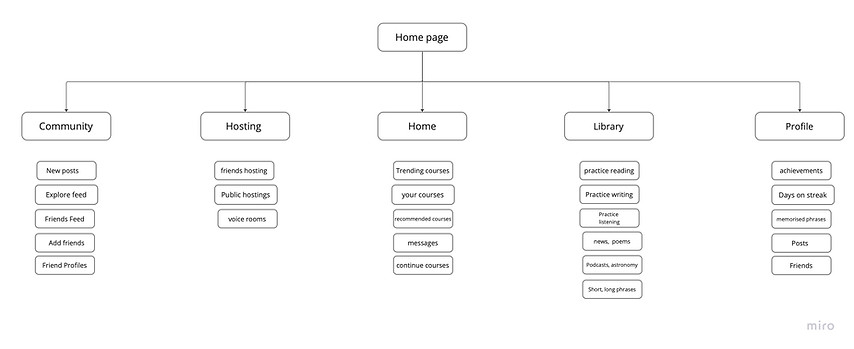
I designed it to balance game elements with real-life practice with strangers, ensuring users gain both engagement and practical skills.
User Flow
I created a user flow diagram to understand the user's journey through my app and highlight any steps that are missing or unnecessary.
Get started
New user?
Yes
No
Create account
Log in
Password correct
No
Enter email
Reset Password
Study Duration
Reason for learning
Select level
Thank you
Choose language
Home
Yes
Library
Community feed
Hosting
Profile
User Course
Recommended courses
Trending course
Continue course
Personal Messages
Explore feed
Friend Feed
Add friend/ Native Speaker
Different Profiles
Different hosting
Friend Hosts
Accomplishments
Day streak
Memorised words
Voice rooms
Practice reading
Practice Writing
Practice Listening
The user flow was designed to keep users engaged while also preparing them for real-life conversations. Users begin at the dashboard, where they can choose between lessons and practice scenarios. The flow integrates gamified elements like certificates with practical exercises, allowing users to earn rewards while practising real-world conversations. This approach ensures that users stay motivated and effectively learn the language.
The Initial Designs + Ideas:
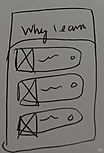
Initially, due to my own experiences, I wanted users to be familiar with the language they choose to learn by having something similar to Netflix, where you can watch series or movies in different languages. However, I acknowledged that it could get complicated since it would be impractical and unrealistic to expect many series or movies to be dubbed in multiple languages. In terms of the actual UI, after some trials, I prioritised the functionality and simplicity over the aesthetics to make it user-friendly.
Low-fidelity Wireframes
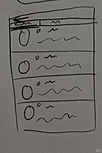
Log in screens
Profile screen








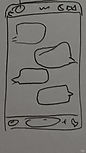

Home Screens
Library screen
Community screen
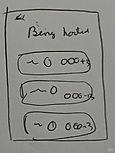
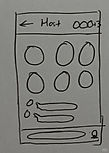
Hosting screen
Home Screens
Version 1:
Version 2:
Version 3:

I decided to place the message icon here
Library screen
Version 1:
Version 2:

I decided to add a favourites and all sections here
Originally, I wanted my designs to be visually appealing through slightly complex designs. However, I ultimately decided to create simpler designs so the user could intuitively navigate through multiple features.
Colour scheme

To This

At first, I wanted to include a range of colours to make it visually engaging. However, after consideration, I considered that the involvement of many colours might be visually unappealing and even stressful, so I chose a simpler colour scheme.


After iterating, I decided that a white background would contrast with the text better, making it more accessible for users. Therefore, I chose my second version instead of the first one with a gradient background.

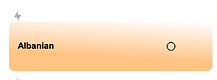
I decided that the interaction buttons should be designed with a gradient so that users will be able to recognise that the button can be interacted with.


In the end, considering my target audience for the app, I determined that Arial would be a more suitable font, rather than the chalkboard font, because it looked too childish.
The Final Prototypes:
1
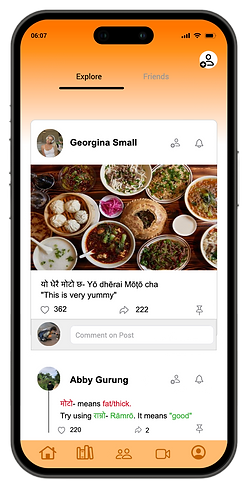
Community feed:
-
A community feed can be engaging and allows a "link" to be formed.
-
By posting on it, users can develop writing skills and an understanding.
-
The reply function can be used as a correction tool, so many can benefit.
-
It can be a nice way to discover native speakers who can help you
-
Social interactions can help retain users


2
Voice rooms:
-
By using these voice chats, users can build understanding and improve their speaking abilities.
-
Many can benefit through interaction.
-
It can be a nice way to discover native speakers who can help you
-
Users can host them, so many people can join, yet it is limited
-
Social interactions can help retain users
3
Immersive Libraries:
-
Different topics, so users can choose what they enjoy from a variety.
-
Listening can help with familiarising oneself with the language
-
The script includes the original language for users and the translated version of the language they want to learn, which helps improve reading and understanding



4
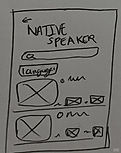
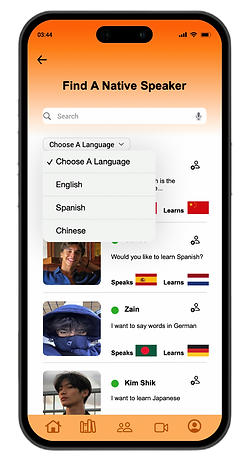
Finding Native Speakers:
-
Making friends who speak other languages can be engaging
-
It can be easier for users to make friends who support you, like tutors. Users won't have to pay and can help whomever they want freely.
-
Social interactions can help retain users.
-
Finding native speakers who can help can make learning more personalised
The Final Screens:
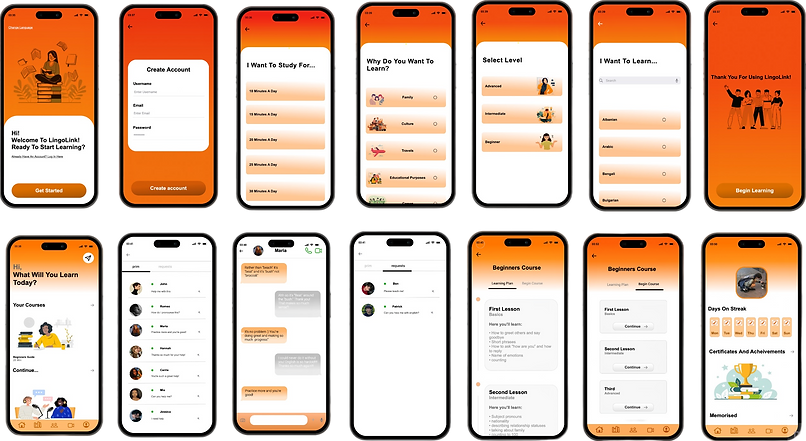


Animated Prototype:
Challenges:
What I'd Do Differently:
-
I did not know what features to prioritise adding or how much before it became cluttered.
-
Prioritising aesthetics or simplicity.
-
Childish or slightly serious typography.
-
Finish quicker.
-
Try taking interviews for primary research rather than surveys for more detail.